
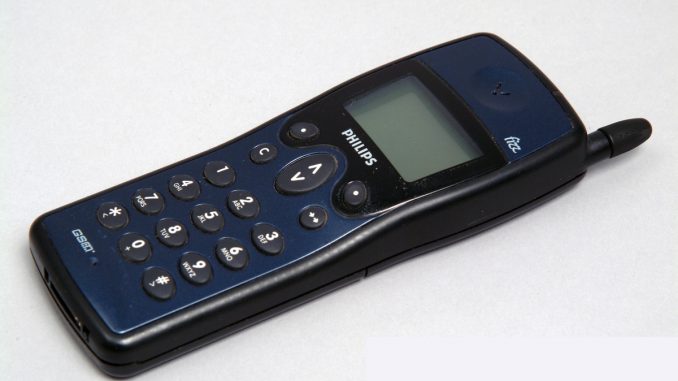
The Philips Fizz is a bit of an odd duck in the mobile pond, but it’s one that deserves a closer look if you’re tired of the usual Ericsson and Nokia dominance. Announced in 1996, its biggest claim to fame is its incredible slimness, just 17mm thick. In an era where most mobiles look like they were carved out of a granite slab, the Fizz feels positively anorexic. It also holds the distinction of being one of the last mainstream handsets to use a full-size SIM card; you don’t pop out the little chip, you slide the entire credit-card-sized piece of plastic into the bottom of the phone. It’s a slightly surreal experience, like feeding an ATM every time you want to make a call.
Under the casing, the Fizz is powered by a Philips P90CL301 processor, which is compatible with the old Motorola 68000 architecture. The screen is a 3-line alphanumeric display that is surprisingly large and clear, flanked by fixed icons for things like voicemail and signal. It’s a GSM 900 device through and through, supporting SMS and basic data/fax via CSD if you’ve got the right tethering kit. Battery life is… well, it’s “1996 levels” of optimistic, offering about 60 minutes of talk time from its Ni-Cd or NiMH packs. If you’re planning a long chat, you’d better stay close to a wall socket.
The Fizz was born out of Philips’ Le Mans facility in France, and it shows in the design, it’s got a certain Gallic flair that sets it apart from the more utilitarian German or Finnish handsets. However, it does feel a bit “plastic-y” in the hand compared to a Nokia, and the lack of a clock or any games means it’s strictly for the “work-hard, play-never” crowd. It’s a solid first effort from Philips that proved they could compete with the big boys, even if it does make you feel like you’re carrying a very thin, very expensive calculator that occasionally rings.