
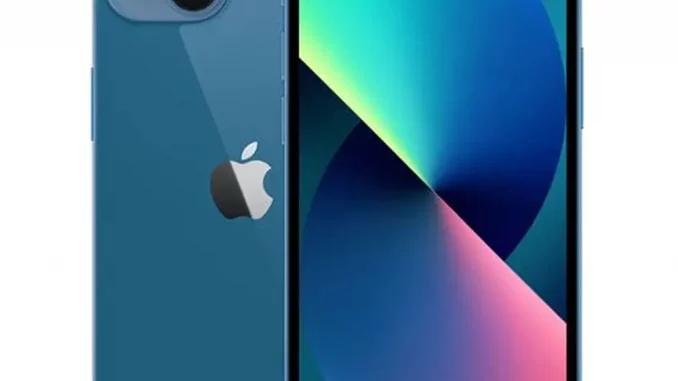
It is September 2021, and Apple has delivered the most ‘complete’ iPhone in years. The iPhone 13 is a 174g evolution of the flat-edge design, featuring a smaller ‘notch’ and a diagonal camera layout that has instantly become an icon on the UK high street. While it looks familiar, the technical upgrades to the battery, display brightness, and camera sensors are profound. It is a dense, high-performance machine that represents the peak of the ‘standard’ flagship formula, offering a level of polish and power that is simply peerless.
The technical headline is the A15 Bionic chip. This 5nm beast features a 6-core CPU and a 4-core GPU, making it significantly faster than any competitor in 2021. This power enables ‘Cinematic Mode’, a technical breakthrough that uses rack-focusing to automatically shift the focus between subjects in a video, creating a professional film look. The 6.1-inch Super Retina XDR OLED display is now 28% brighter, peaking at 800 nits in typical use. On the imaging front, the iPhone 13 inherits the massive sensor and ‘Sensor-Shift’ Optical Image Stabilisation from the previous year’s 12 Pro Max, allowing it to capture 47% more light for superior night shots.
One of its most important technical victories is the battery life; through a larger physical cell and the efficiency of the A15, the iPhone 13 lasts up to 2.5 hours longer than the 12. Connectivity is future-proofed with 5G, Wi-Fi 6, and a significantly expanded range of LTE bands. It retains the MagSafe system and IP68 water resistance up to 6 metres. The iPhone 13 is a masterclass in refinement; it didn’t need to reinvent the wheel because it perfected every single component. It is a fast, durable, and incredibly long-lasting device that solidified Apple’s dominance in the premium market.