

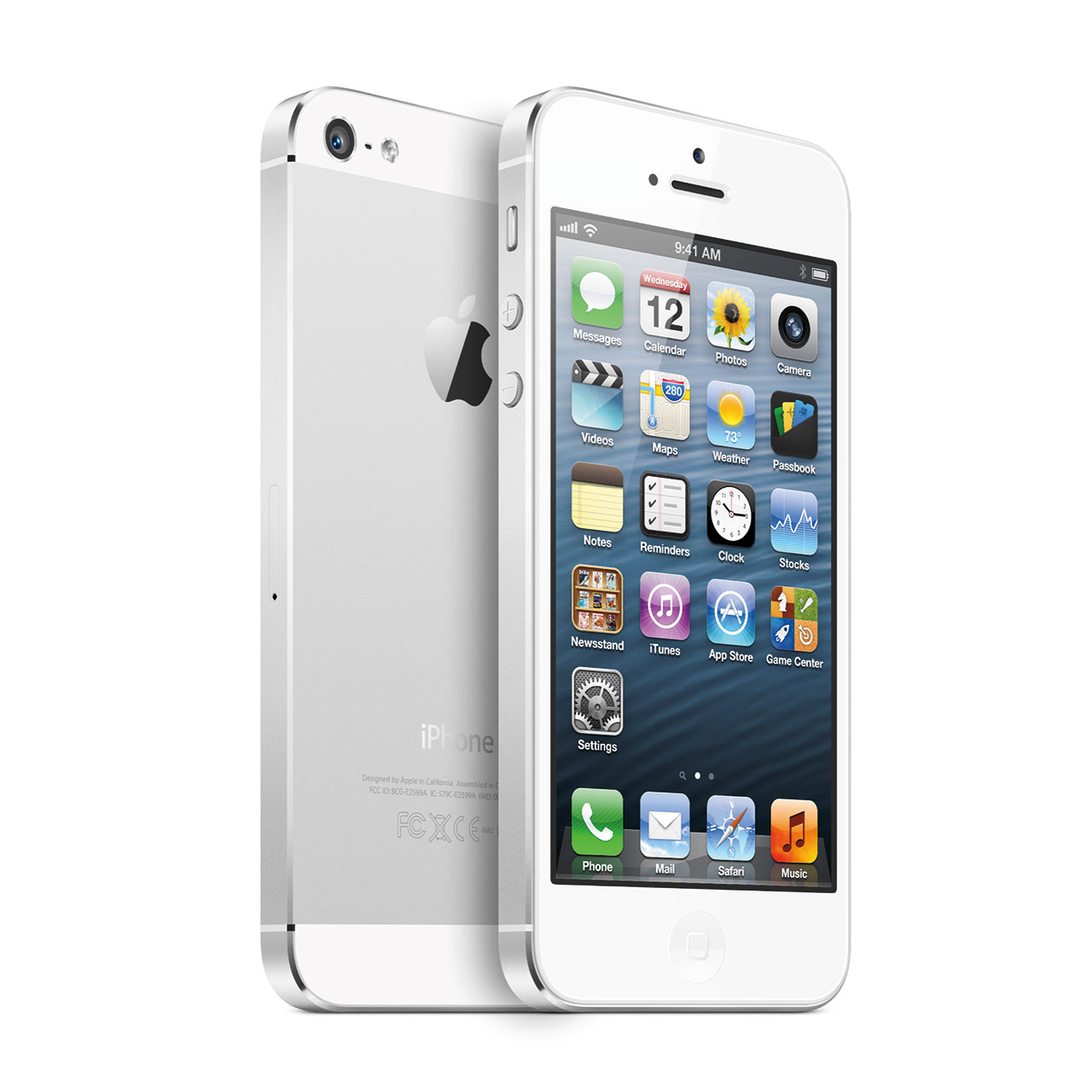
Welcome to September 2012, and Apple has finally done the unthinkable: they’ve changed the screen size. The iPhone 5 has arrived, and it is a tall, slender masterpiece of precision engineering that makes every other phone on the market look like a plastic toy. Gone is the ‘glass sandwich’ of the 4S, replaced by a unibody aluminium chassis with ‘chamfered edges’ that catch the light like a diamond. At just 7.6mm thick and a featherweight 112g, it is so light that it feels like it might float out of your hand. For the UK user, this is the phone that proved Apple could innovate without losing its soul.
The technical headline is the new 4-inch Retina Display. By making the screen taller but not wider, Apple has increased the resolution to 1136 x 640 while maintaining the 326 PPI density. This is a brilliant technical compromise; it gives you a 16:9 aspect ratio for movies and an extra row of app icons, but the phone remains perfectly usable with one thumb. The screen also features ‘in-cell’ touch technology, which integrates the touch sensors directly into the LCD. This eliminates a layer of glass, making the display thinner and more vibrant, as if you’re touching the pixels themselves.
Under the hood, the iPhone 5 is powered by the A6 chip, a custom Apple design that is twice as fast as the A5. It handles iOS 6 with a fluidity that is simply unmatched in the industry. But the most controversial technical shift is the ‘Lightning’ connector. Apple has retired the iconic 30-pin dock after a decade in favour of a tiny, reversible 8-pin plug. It’s faster, more durable, and infinitely more convenient, even if it has rendered every speaker dock in the UK obsolete overnight. Connectivity has also taken a giant leap with the inclusion of 4G LTE, though in the UK, this is initially limited to the EE network, leaving O2 and Vodafone users staring at their ‘3G’ icons in envy.
The camera remains an 8-megapixel ‘iSight’ unit, but it’s been refined with a sapphire crystal lens cover and a new ‘Panorama’ mode that stitches together massive 28MB images with incredible precision. It also features a 1.2-megapixel front-facing camera for 720p FaceTime HD calls. The battery life is surprisingly robust for such a thin device, offering 8 hours of talk time on 3G. While it lacks the NFC and ‘Human-Centric’ gimmicks of the Galaxy S III, the iPhone 5 wins on pure, unadulterated quality. It is a jewel of a phone, a technical triumph of ‘less is more’ that set the design standard for years to come.
