

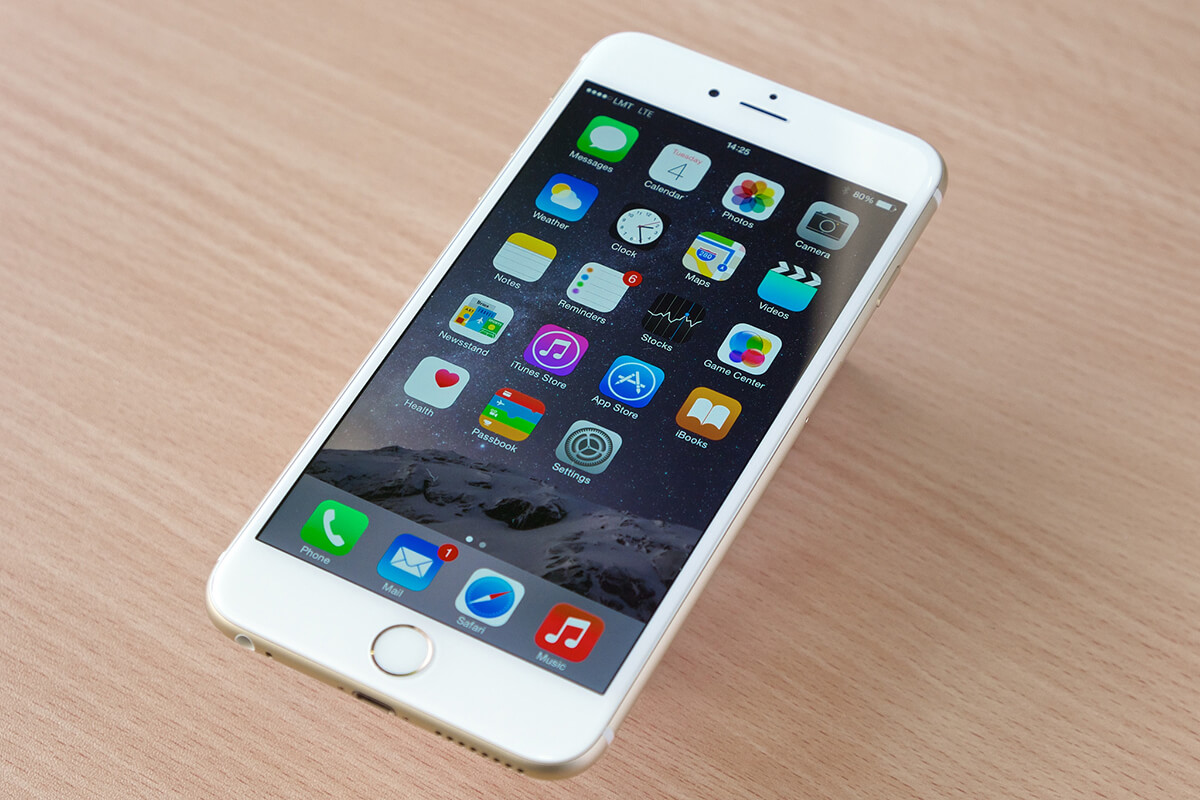
Welcome to September 2014, and the ‘Big’ change has finally arrived. Apple has finally released a 4.7-inch flagship, the iPhone 6, moving away from the sharp edges of the 5s to a ‘2.5D’ curved-glass and anodised aluminium unibody that is just 6.9mm thick. In the UK, this is a cultural moment; Apple has finally acknowledged that the world wants more screen. The design is seamless, with the glass flowing perfectly into the metal frame, though it has necessitated a ‘camera bump’ on the back, a technical compromise that has sparked endless debate amongst purists.
The technical headline is the new ‘Retina HD’ display. The iPhone 6 features a 1334 x 750 resolution (326 PPI) using ‘dual-domain’ pixels for wider viewing angles and a higher contrast ratio that makes blacks look deeper and text look sharper. Powering this screen is the A8 chip, built on a second-generation 64-bit architecture. It is 25% faster than the A7 and remarkably power-efficient, allowing the phone to remain incredibly thin while still providing a solid day of use. It also features the M8 motion coprocessor, which now includes a barometer to track elevation, telling your health app how many flights of stairs you’ve climbed.
On the imaging front, Apple has stuck with 8 megapixels but introduced ‘Focus Pixels’ for near-instant phase-detection autofocus. It can record 1080p video at 60fps and a staggering 240fps for ‘super slow-mo’ that looks like a high-budget film. This is also the year of Apple Pay; the new iPhone 6 features an NFC chip and a ‘Secure Element’ that, combined with Touch ID, turns your phone into a digital wallet. Connectivity is upgraded to 150Mbps LTE and Wi-Fi ac. Despite the ‘Bentgate’ controversy, the iPhone 6 is a massive technical success, bringing the iPhone into the large-screen era with a level of polish that has cemented Apple’s lead.
