
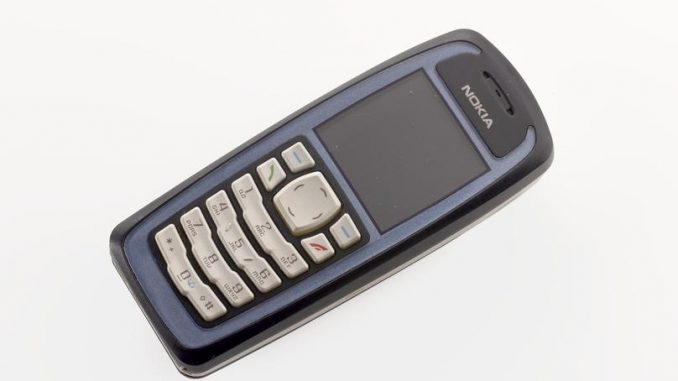
If you’ve ever found yourself squinting at a mobile screen and wondering which of the twenty identical buttons you’re supposed to press to find your mum’s number, the Nokia 3110 is here to save your sanity. Launched in early 1997, this isn’t just another black box; it’s the debut of the ‘Navi-Key’. It’s a single, oversized button sitting right under the screen that contextually changes its function. If the screen says ‘Menu’, the button opens the menu; if it says ‘Select’, it selects. It’s so blindingly obvious you wonder why it took until now for someone to think of it. Priced as a solid mid-range business tool, it shares the same internal DCT2 platform as the 8110 ‘Banana Phone’, but without the high-fashion price tag or the sliding gimmick.
Technically, the 3110 is a robust GSM 900 worker. It’s powered by a 13 MHz Hitachi microcontroller and packs 1 MB of flash memory, which is plenty for storing 250 contacts on your SIM. The display is a monochrome graphic marvel of 83 x 41 pixels, enough to show four lines of text with a green backlight that’s actually readable in a dimly lit pub. One of its most underrated features is the PC synchronisation capability via the data connector at the base, allowing you to manage your calendar and contacts from a Windows 95 machine, provided you have the right cables and the patience to deal with COM ports.
It’s not all sleek sailing, mind. The external antenna is still very much present, unlike some of the radical new designs we’re seeing, and at 187g with the standard NiMH battery, it’s got enough heft to remind you it’s there. Talk time is a respectable 90 to 165 minutes depending on your signal strength, and if you’re really posh, you can swap the standard battery for a slim Li-Ion version to shave off a few grams. It lacks the games and infrared port of its more expensive siblings, but for the no-nonsense professional who wants a phone that doesn’t require a manual the size of a telephone directory, the 3110 is the gold standard of usability.