
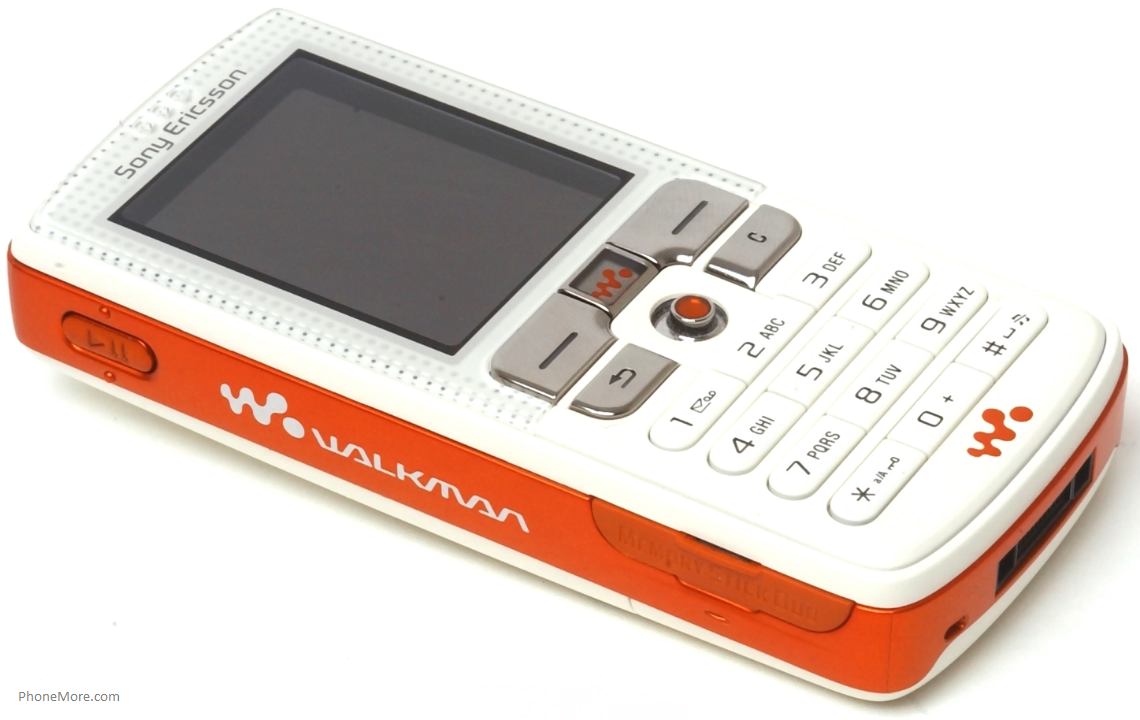
The year is 2005, and Sony has finally done what we all knew was coming: they’ve put the ‘Walkman’ logo on a phone. The W800i is the vibrant, orange-and-cream sibling to the K750i, and it is the first mobile device that truly prioritises music over calls. It is technically identical to the K750i under the skin—sharing the same 2-megapixel autofocus camera and 176 x 220 pixel TFT screen—but the ‘Walkman’ branding isn’t just a paint job. It’s a cultural shift. In the UK, this is the phone that made the ‘white earbuds’ of the iPod look a bit monochrome, offering a ‘sporty’ alternative for the music-obsessed.nnThe real technical differentiator is the storage and the ‘Walkman’ button. While the K750i ships with 64MB, the W800i arrives with a massive 512MB Memory Stick PRO Duo card in the box, enough for about 150 tracks or 10-12 full albums in high-quality MP3 or AAC format. There is also a dedicated ‘Direct Music’ button above the joystick that instantly launches the media player, which features a significantly more advanced interface with support for playlists, shuffle, and a ‘Mega Bass’ equaliser. Perhaps most impressively, it features a ‘Music-only’ mode (a flight mode) that allows you to turn off the cellular radio and just listen to tunes, effectively doubling the battery life to 30 hours of playback.nnErgonomically, the W800i improves on the K750i with slightly larger, more tactile keys and a joystick that feels less prone to the ‘dust-drift’ issues of its predecessor. The camera lens cover has been redesigned to a smaller, shutter-style flick-switch which is much harder to open accidentally in your pocket. Connectivity remains comprehensive with Bluetooth 2.0, Infrared, and USB mass storage support—meaning you can just drag and drop your music from a PC without needing a degree in computer science. The included HPM-70 headset is a technical marvel in itself, featuring a 3.5mm adapter so you can finally bin the cheap included earbuds and use your own high-end Sennheisers while still being able to take calls. At 99g, it is the ultimate ‘convergent’ device; it’s a brilliant phone, a class-leading camera, and the best portable music player you can buy, all wrapped in a chassis that looks like it belongs on a beach in Ibiza.”
Nokia N70 “It is late 2005, and Nokia has just launched the ‘Nseries’ with the N70, a handset designed to remind everyone that if they want a real smartphone, they have to come to Finland. It is the spiritual successor to the 6680 and currently the smallest 3G smartphone on the market, packing the power of a desktop PC into a 126g candybar that feels like a solid ingot of tech. For the UK user, this is the definitive 3G experience; every major network from O2 to Vodafone is flogging it, and for good reason—it’s the most powerful tool you can clip to your belt.nnTechnically, the N70 is a beast, running Symbian OS v8.1 (Series 60 2nd Edition, FP3) on a 220 MHz TI OMAP processor. This is significantly faster than previous models, making the multitasking and app-loading feel remarkably smooth. The headline feature is the dual cameras: a front-facing VGA lens for the novelty of 3G video calls (where you can look at a grainy version of your boss in real-time) and a 2-megapixel sensor on the back protected by a massive sliding door that covers nearly the entire rear of the phone. It captures video at 352 x 288 resolution, and while it lacks the autofocus of the Sony Ericsson K750i, the ‘Slide and Shoot’ functionality makes it the fastest camera to deploy in a pinch.nnThe screen is a 2.1-inch TFT with 262,144 colours, providing a rich canvas for the sophisticated Nseries interface. Because it’s a Symbian device, the technical ceiling is incredibly high; you can install a full office suite, PDF readers, and high-end 3D games that actually look decent on the 176 x 208 resolution display. Storage is handled via RS-MMC (Reduced Size MultiMediaCard), with a 64MB card typically included, though you’ll want to upgrade to a 1GB card immediately if you plan on using the built-in MP3 player and FM radio. The battery life is surprisingly decent for a 3G smartphone, with the 970 mAh Li-Ion pack providing enough juice for about 11 days of standby. The N70 is ‘business at the front, party at the back’—it is a sober, professional handset that just happens to be a multimedia powerhouse. It is the definitive ‘everything’ phone for 2005.