

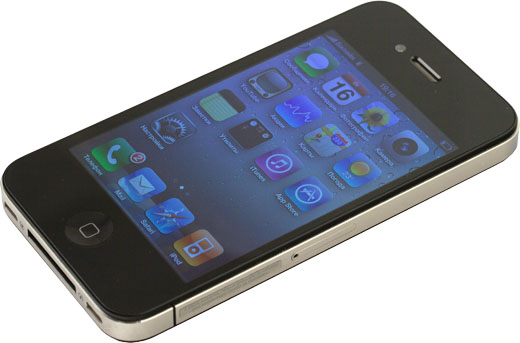
Welcome to June 2010, and Steve Jobs has just unveiled the ‘Retina Display,’ effectively ending the resolution wars with a single technical knockout. The iPhone 4 is a radical departure from the ‘soap-bar’ curves of the 3GS, opting instead for a ‘glass and steel sandwich’ design that is just 9.3mm thick. It is a stunning piece of industrial engineering, where the structural stainless steel band around the edge also functions as the phone’s antennae. In the UK, the excitement is palpable; this is the phone that made every other screen on the planet look like it was made of LEGO bricks.
The technical headline is, of course, that screen. A 3.5-inch IPS LCD with a resolution of 640 x 960 pixels. By quadrupling the pixel count of the previous model, Apple has reached a density of 326 pixels per inch (PPI). At this level, the human eye can no longer distinguish individual pixels at a normal viewing distance. Text looks like it has been printed in a high-end glossy magazine, and photos possess a life-like clarity that is genuinely startling. It is a technical milestone that has set a new ‘gold standard’ for the entire industry. Under the hood, it’s powered by Apple’s own A4 chip, the same silicon found in the original iPad, ensuring that the ‘iOS 4’ experience is blisteringly fast.
On the imaging front, the iPhone 4 is another giant leap forward. It features a 5-megapixel ‘Back-Illuminated’ (BSI) sensor, which is a significant technical upgrade for low-light photography. It also finally introduces 720p HD video recording at 30fps and a front-facing camera for ‘FaceTime’ video calling. FaceTime is a classic Apple technical play: it only works over Wi-Fi and only between Apple devices, but it works so seamlessly that it has instantly turned video calling from a 3G gimmick into a cultural phenomenon. The addition of a secondary microphone for noise cancellation also makes this one of the clearest-sounding phones for actual voice calls in a noisy environment.
However, the iPhone 4’s biggest technical innovation also led to its biggest controversy: ‘Antennagate.’ Because the antennae are exposed on the outside of the frame, holding the phone in a certain way (the ‘death grip’) can bridge the gap between the cellular and Bluetooth/Wi-Fi bands, causing the signal to drop. Apple’s response, ‘just avoid holding it that way’, became a meme before we even called them memes. Despite this, and the fact that the glass back is essentially a ‘shatter-waiting-to-happen’ if dropped on a London pavement, the iPhone 4 is a masterpiece. It features a larger 1420 mAh battery that, thanks to the efficiency of the A4 chip, finally provides a solid day of heavy use. It is a precision-engineered, high-definition marvel that has redefined what a premium smartphone should feel like.
