

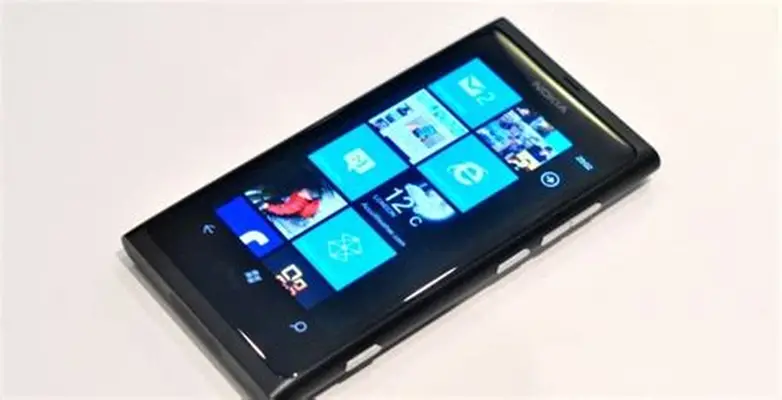
Welcome to November 2011, and the ‘Shotgun Marriage’ between Nokia and Microsoft has finally produced its first offspring. The Nokia Lumia 800 is the most important phone in the Finnish giant’s history, a ‘do or die’ device designed to rescue them from the ‘burning platform’ of Symbian. In the UK, it has arrived with a massive marketing blitz, promising a ‘refreshingly different’ experience. It is, quite simply, the most beautiful smartphone ever made. Carved from a single piece of injection-moulded polycarbonate, it features a unibody design that is so seamless and solid it feels like a high-tech worry stone.
Technically, the Lumia 800 is a masterpiece of industrial design. The polycarbonate shell isn’t just painted; the colour is integral to the material, meaning scratches are almost invisible. The 3.7-inch AMOLED ‘ClearBlack’ display features curved Gorilla Glass that flows into the edges of the body, creating a tactile sensation that makes swiping through the Windows Phone 7.5 ‘Mango’ interface a joyous experience. The blacks are so deep that the ‘Live Tiles’ appear to float on the surface of the glass. While the 480 x 800 resolution is standard for the OS, the ClearBlack polarizing filters make it one of the most readable screens in direct British sunlight.
Under the hood, Microsoft’s strict hardware requirements mean the Lumia 800 is powered by a 1.4GHz single-core Snapdragon processor and 512MB of RAM. While this sounds ‘low-end’ compared to the dual-core Android giants, the technical reality is the opposite. Windows Phone is so incredibly well-optimised that the Lumia 800 feels faster and more responsive than almost any Android phone on the market. It is fluid, stutter-free, and remarkably consistent. Nokia has also added its own technical ‘secret sauce’ in the form of ‘Nokia Drive’, a free, offline, turn-by-turn satnav system that remains the best in the business.
On the imaging front, the Lumia features an 8-megapixel sensor with Carl Zeiss optics and an f/2.2 aperture. It takes fantastic stills and records 720p HD video, though it lacks the 1080p capabilities of the iPhone 4S. It also lacks a front-facing camera, which is a baffling technical omission for a 2011 flagship. Connectivity is solid with 14.4Mbps HSDPA, Wi-Fi, and Bluetooth 2.1. However, the 1450 mAh battery is a bit of a weak point; the ‘Live Tiles’ are data-hungry, and early UK users are reporting that the phone struggles to make it through a full workday. Despite the battery woes and the ‘App Gap’ in the Windows Marketplace, the Lumia 800 is a triumph of aesthetics and software integration. It is a bold, brave, and beautiful attempt to find a ‘Third Way’ in the smartphone wars.
