

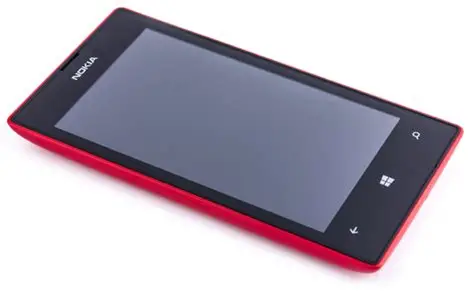
Welcome to the spring of 2013, where Nokia has just achieved a minor miracle in the UK budget market. The Lumia 520 is a colorful, pocketable entry into the Windows Phone 8 world that has become an overnight sensation. It is a compact, 124g handset with a removable polycarbonate back available in vibrant yellow, red, cyan, or classic black. While it is unashamedly plastic, it feels remarkably solid and ‘Nokia-tough’, a device that you wouldn’t be afraid to drop. In a world of expensive slabs, the 520 is the accessible gateway for the millions of UK users still clinging to their old T9 keypads.
Technically, the 520 is a masterclass in optimization. It features a 4.0-inch IPS LCD with a resolution of 480 x 800 (WVGA). While the pixel density is modest, the screen features the same ‘Super Sensitive Touch’ technology as the flagship 920, meaning you can use it with fingernails or even through thick winter gloves, a huge technical win for a budget device. Under the hood, it’s powered by a 1GHz dual-core Snapdragon processor and 512MB of RAM. While that RAM count would make an Android phone crawl, Windows Phone 8 is so incredibly efficient that the ‘Live Tiles’ interface remains fluid and responsive. It feels significantly ‘snappier’ in daily use than almost any Android phone in the same price bracket.
On the imaging front, it packs a 5-megapixel camera with autofocus and 720p video recording. It lacks a flash and a front-facing camera, which are the main technical compromises, but the daylight photo quality is surprisingly good for the price. Connectivity is solid with 3G (HSPA), Wi-Fi, and GPS. One of its best features is the inclusion of the full ‘Nokia HERE’ suite, including offline maps and turn-by-turn navigation, essentially giving you a high-quality SatNav for free. The 1,430 mAh battery is more than enough to power the efficient OS for a full day. The Lumia 520 is the definitive budget smartphone of 2013; it proved that a cheap phone could still be fast, colorful, and genuinely fun to use.
