

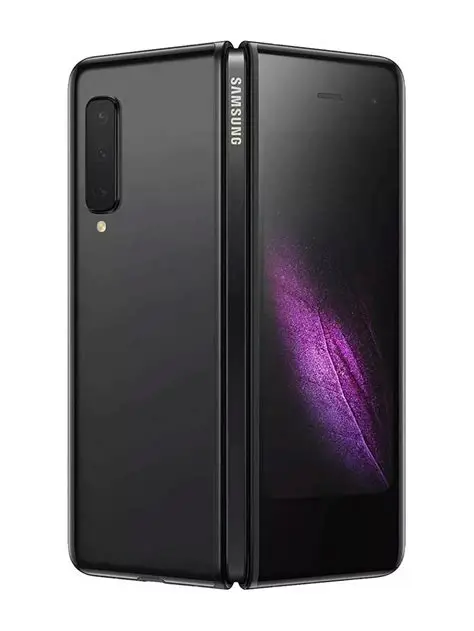
Welcome to September 2019, and the future has finally arrived, and it folds. The Samsung Galaxy Fold is the most daring technical experiment in mobile history, a 263g pioneer that transitions from a slim 4.6-inch handset to a massive 7.3-inch tablet. After a brief delay to reinforce the hinge and display layers, it has arrived in the UK as the ultimate status symbol for the early adopter. It is a dense, complex, and high-stakes machine that has redefined the structural limits of glass and plastic.
The technical headline is the ‘Infinity Flex’ display. Using a revolutionary polyimide layer instead of traditional glass, the 7.3-inch Dynamic AMOLED screen (2152 x 1536) can fold hundreds of thousands of times. It is paired with a sophisticated ‘dual-axis’ hinge that mimics the complexity of a watch movement. Under the hood, it is a specification monster: a Snapdragon 855, 12GB of RAM, and 512GB of UFS 3.0 storage. It also features a dual-cell battery system totaling 4,380 mAh, split across both halves of the device to ensure perfect balance in the hand.
The Fold is a productivity beast, allowing for ‘Three-App Multitasking’ on its large inner canvas. It features a total of six cameras, ensuring you can take a photo regardless of how you are holding the device. Connectivity is future-proofed with 5G support, a first for many UK users. While it remains a first-generation ‘luxury’ item with a visible screen crease, the Galaxy Fold is a massive technical achievement. It proved that the ‘slab’ era of smartphones was not the end of history, but merely the beginning of the foldable revolution.
