

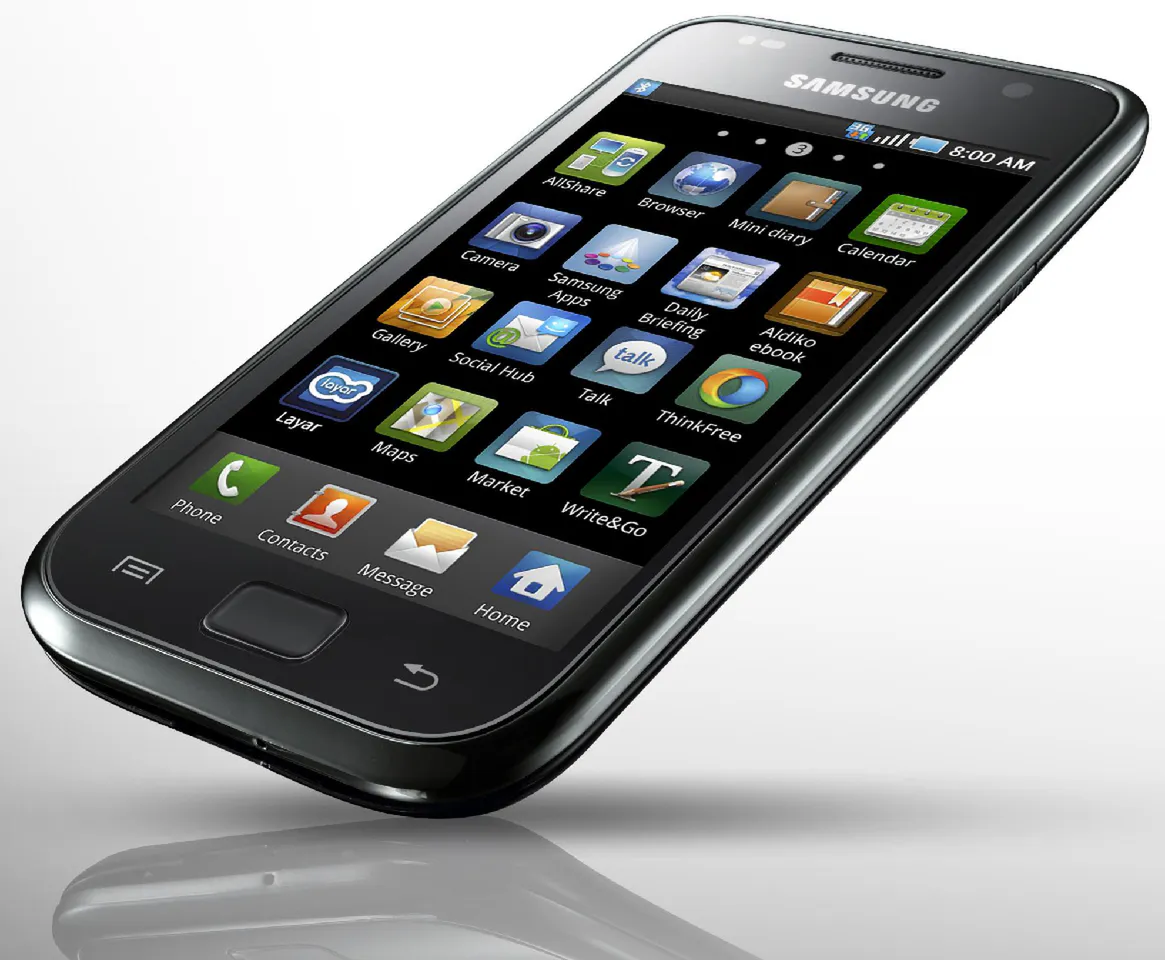
It is the summer of 2010, and Samsung has finally stopped playing second fiddle to the European and American giants. The I9000, better known as the Galaxy S, is the opening salvo in a campaign for global Android dominance. In the UK, it has arrived as the first legitimate challenger to the iPhone 4’s technical supremacy. It is a slim, lightweight (119g) slab of gloss-black plastic that might feel a bit ‘cheap’ compared to Apple’s steel sandwich, but once you press the power button, the hardware quality becomes irrelevant. You are looking at the future of mobile display technology.
The technical crown jewel is the 4.0-inch Super AMOLED display with a 480 x 800 (WVGA) resolution. While the iPhone 4 has the pixel density, the Galaxy S has the ‘pop.’ Because AMOLED technology doesn’t require a backlight, the blacks are infinite and the contrast is staggering. It makes every other screen in the room look like it’s being viewed through a dusty lens. Powering this visual feast is Samsung’s own 1GHz ‘Hummingbird’ processor and a dedicated PowerVR SGX540 GPU, a combination that makes the Galaxy S the most powerful gaming and multimedia machine on the Android market. It handles high-definition DivX and MKV files natively, a technical feat that leaves iPhone users crying into their proprietary iTunes libraries.
On the imaging side, it packs a 5-megapixel autofocus camera that records 720p HD video. While it lacks a flash (a baffling technical omission for a flagship), the sensor’s performance in daylight is top-tier. Under the hood, Samsung has included 8GB or 16GB of internal storage, plus a microSD slot for another 32GB, offering a ceiling of 48GB, dwarfing the competition. Connectivity is exhaustive: Bluetooth 3.0 (a world first for a phone), Wi-Fi b/g/n, and DLNA support for wirelessly streaming your photos to a compatible TV. It even features a 1500 mAh battery that, thanks to the efficiency of the AMOLED screen, can actually survive a day of heavy media consumption.
The software is Android 2.1 Eclair with Samsung’s ‘TouchWiz 3.0’ overlay. It’s colourful, fast, and introduces the ‘Social Hub,’ which attempts to merge your emails, texts, and social feeds into one stream. It also features ‘Swype,’ a revolutionary technical way of typing by sliding your finger across the glass rather than tapping individual keys. The Galaxy S isn’t just a phone; it’s a technical declaration of war. It proved that Samsung could build its own silicon, its own screens, and its own ecosystem. It is the definitive ‘power-user’ handset of 2010 and the beginning of a dynasty.
