

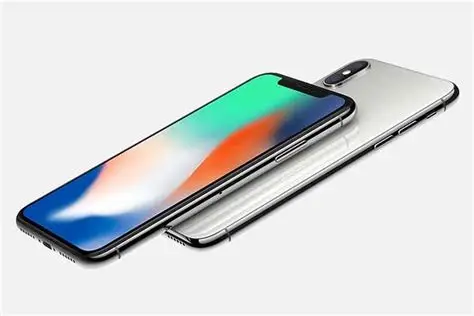
Welcome to November 2017, and Apple has just changed the world again. The iPhone X (pronounced ‘Ten’) is a total technical reset, celebrating a decade of iPhone by deleting everything we thought we knew. The Home button is gone, the bezels are gone, and in their place is the ‘Super Retina’ display and the ‘Notch.’ At 174g, finished in surgical-grade stainless steel and glass, it is a staggering piece of industrial design that feels like a single, seamless object of light. In the UK, it has arrived as the most expensive, and most desirable, handset in history.
The technical headline is Face ID. Replacing Touch ID, Apple has packed a ‘TrueDepth’ camera system into the notch, featuring a dot projector, infrared camera, and flood illuminator that maps 30,000 invisible dots onto your face. It is a biometric system so advanced it can work in total darkness and can’t be fooled by photos or masks. The screen is Apple’s first OLED, a 5.8-inch panel (2436 x 1125) that supports HDR10 and Dolby Vision. It offers a 1,000,000 to 1 contrast ratio, bringing true blacks and incredible vibrancy to the iPhone for the first time.
Under the hood, it shares the A11 Bionic chip and 3GB of RAM, powering a new gesture-based version of iOS that feels incredibly fluid. The dual 12-megapixel cameras both feature Optical Image Stabilisation (OIS), a technical first for the iPhone, allowing for incredible Portrait Mode shots and stable video. It also introduces ‘Animoji,’ using the TrueDepth camera to map your facial expressions onto 3D characters. Connectivity includes 4G LTE, Wi-Fi ac, and Qi wireless charging. The iPhone X is more than just a phone; it is a technical manifesto. It set the blueprint for the next decade of mobile design, proving that the future of the smartphone is all-screen and all-intelligent.
